The Influencer Program / Guides
Sell your first online course to people who already want it
How to find a course topic with real demand, get buyers before you build, make it with free tools, and launch so sales come in on day one.
- 8 min read
- Updated Nov 26, 2026
- 100% free community
(Put your real links. No follower minimum, but you need to be an active content creator, otherwise you get rejected)
To sell a course, start with a problem your audience already asks you about, sell a small first version before it is finished, and launch it to a waitlist. You do not need a big following, and you do not need to call yourself an expert.
What you need is experience and a process that got you results. If something worked for you, you can teach it.
What course should you make?
The best course topic is usually hiding in what you already post.
- Check your most popular content. Look back over the last 6 months to a year. Which posts got the most engagement and the most new followers? What did people ask in the comments?
- Keep a list of questions. Every question people ask in your comments and DMs could be a lesson. Keep a running list on your phone.
- Ask your audience. Post a story or send an email asking what they would want you to teach. This works best when your followers are the people you want to teach, not family and friends.
- No audience yet? Look at creators in your niche. See which of their posts do well and what their followers keep asking.
- Brainstorm with an AI chatbot. The more detail you give it about you and your audience, the better the ideas.
Before you commit, check the topic against four questions:
- Does it match what you know and already post about?
- Does it solve a big pain point your followers struggle with?
- Are people actively looking for a fix?
- Can it take someone from stuck to successful?
A course that sells for years comes from your own experience, a problem many other people have, and a format that can grow without eating all your time.
How do you know people will pay before you build it?
Many courses fail because they start as a pile of information. The ones that sell start by solving a problem people feel.
Talk to people who have the problem
Send a simple text or DM to people you know: do you know anyone struggling with this? Then book short video calls with those people. One course business began with over 50 of these calls, mostly with strangers, because strangers give more honest answers.
Ask three things:
- What is the most painful part of this problem for you?
- If you could wave a magic wand, what would the fix look like?
- What makes fixing it urgent right now?
Add everyone you speak to a list. A spreadsheet is fine.
Write your promise in one line
Use this shape: I help [who] go from [where they are stuck] to [where they want to be] so they can [how it will feel]. Every piece of marketing you make later comes from this sentence. If it is not clear, nothing else works.
Sell it before it exists
Go back to the people you interviewed and tell them you built the fix they described. In that first case, 8 people paid before the course was made. They got a discount for being first, and the lessons were taught live each week so the creator could see what worked, cut what did not, and collect feedback and results.
Price it on value
Do not undervalue what you know. Price on what it costs your buyer, in money and stress, to keep living with the problem. A real price also makes buyers take the work seriously.
| What worked | The number |
|---|---|
| Video calls with people who had the problem, before building | Over 50 |
| People who paid before the first version existed | 8 |
| Consultation calls a month, in one coaching program | At least 5, closing at least 2 |
| Live coaching calls added on top of the lessons | Two a week |
| Launch content plan | 6 weeks |
| One creator's first year of course sales, in 2021 | $96,000 |
How do you outline a course?
Use sticky notes. It sounds simple, and it works.
- Brain dump. Write every single thing someone needs to know to get from start to finish, one idea per note. Do not sort yet.
- Put them in order. What does someone need to do first? Line the notes up from first step to last.
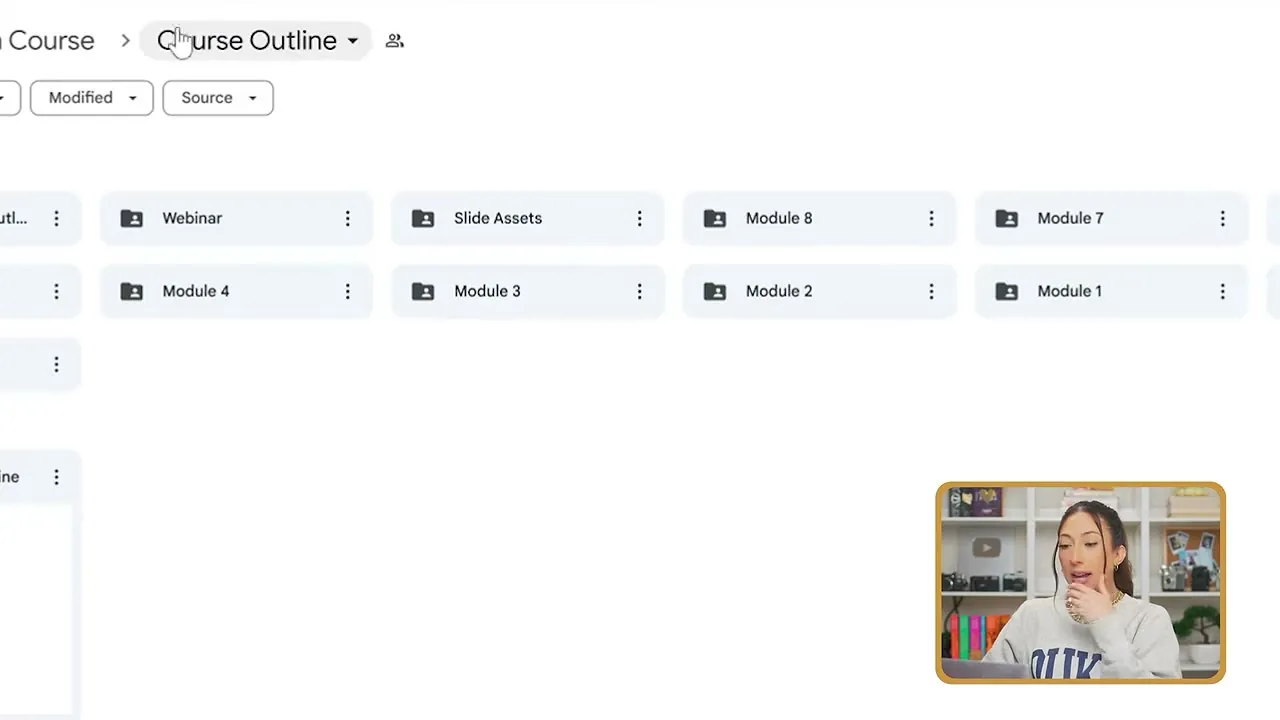
- Group them. Themes start to show. Each group becomes a module, and each note inside it becomes a lesson.
- Ask for gaps. Ask your audience what they want to learn and what other courses on the topic left out.
- Check other courses. Read the sales pages of similar courses, not the courses, to see if you missed a topic.
- Get a second opinion. Paste your outline into an AI chatbot and ask what is missing, and what downloads or templates would help.
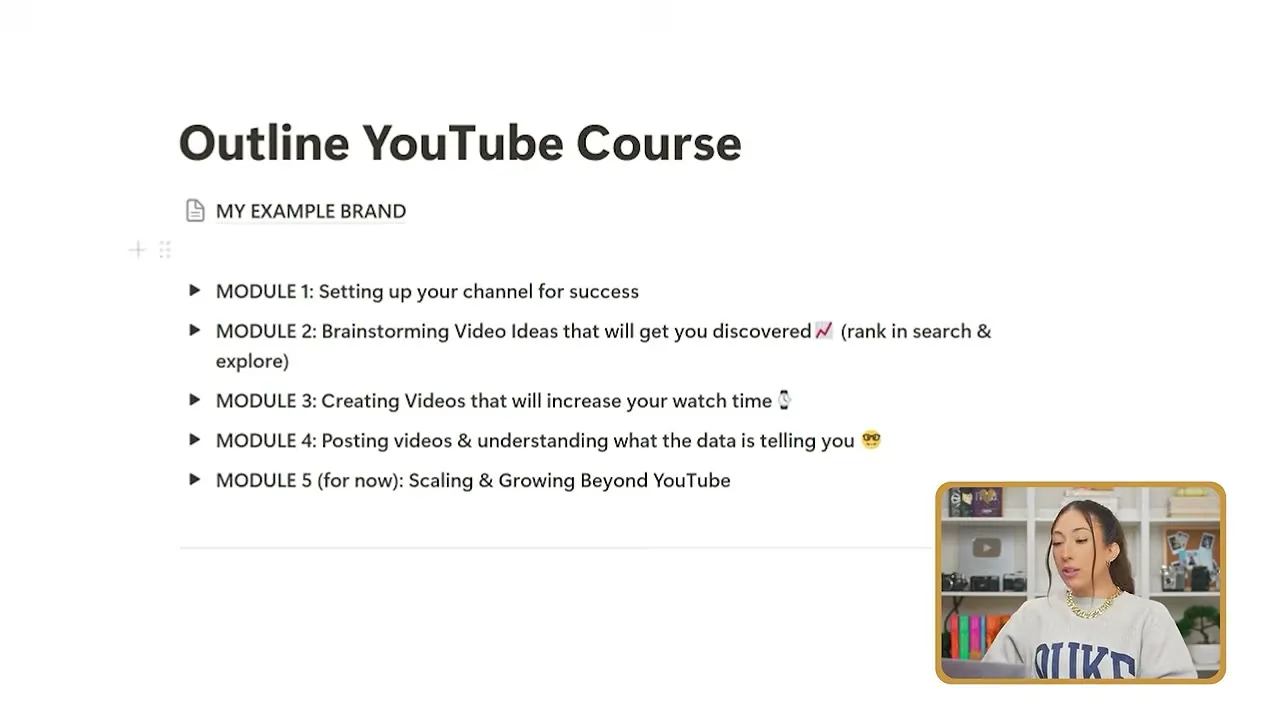
Then move the outline into a doc or a notes app, with one script per lesson. Some course creators script every lesson word for word so nothing gets missed.
Start with the smallest version that works
Your first course does not need every download and bonus. Build the minimum that delivers the main result, start selling, then add lessons over time. As the course grows, the price can grow too.
How do you make the course?
There are two common formats, and you can mix them.
- Slides with your voice. Make slides in a free design tool, put them in present mode, and record your screen with your mic on. Check that you pressed record before you teach a whole lesson.
- You on camera. Your phone is enough to start, or use a camera if you have one.
Edit with a free editor. See video editing software for beginners.
Where do you host and sell it?
You need a place for the lessons and a way to take payment.
A free option
Canva has a Course design type. You add lessons as docs or videos, attach files, and students get a progress bar and can mark lessons complete.
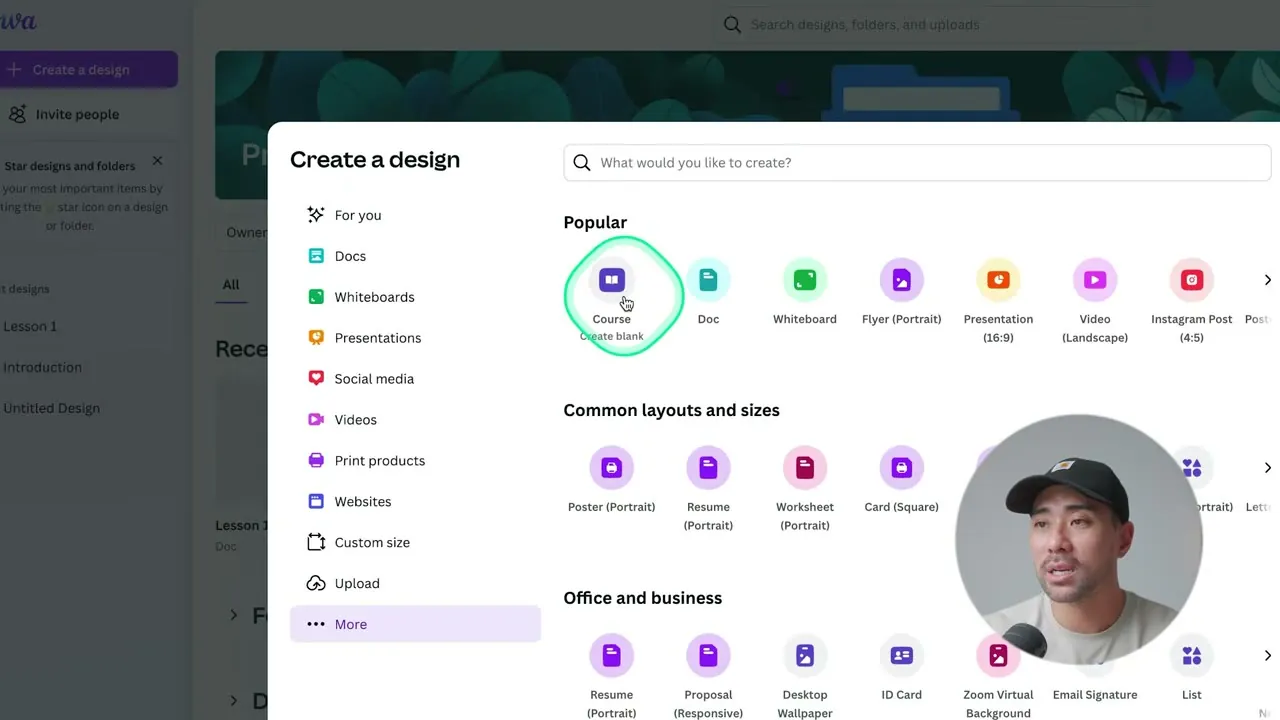
The catch: you add every student by hand. You need a separate checkout, such as Shopify or Gumroad, then you invite each buyer by email. It suits you if you want free hosting and do not mind adding students yourself, or if you are training your own team.
A creator store with a course builder
Some link in bio store tools now let you build a course right inside the store. You get a checkout page, payment plans that split the price over three months, email flows, order bumps, and an affiliate option so others can sell it for you. Students can take it on their phones.
Decide how much help comes with it
A cheap self paced course that anyone can buy can turn messy as it grows. One course creator found the same questions coming in over and over, and a lot of support went to buyers who were not taking it seriously. The fix was lessons people study on their own, plus a private community and two live coaching calls a week, with an application before anyone could buy.
Selling a course is one way creators earn from what they know. The Influencer Program is a free creator community that teaches you and helps you grow, with free guides and content. We are not talent managers or an agency that signs you, and there is no contract.
Join the free creator program
Free training to grow, a community of creators, and weekly feedback on your videos. No contract.
(Put your real links. No follower minimum, but you need to be an active content creator, otherwise you get rejected)
How do you launch a course?
Launching starts weeks before the course goes live.
- Build it in public. Share what you are working on. Ask your audience which lessons they want. Ask for advice when you get stuck. By launch day it is no surprise.
- Start a waitlist. A simple form linked in your bio is enough. Ask for a name and email, and say they will join your email list. On launch morning, email the list. That is how one creator woke up to a sale on launch day.
- Tease the date. Tell people when it opens so they can plan and save.
- Try a live launch. Open the course for a short window, like a week, then close it. The deadline helps people decide. Use the first group's feedback to improve the course and raise the price next time.
You can also skip the big launch and set the course live. Launches are a lot of work.
How do you keep selling after launch?
- Put the link everywhere. Your bios, your YouTube descriptions, a pinned comment on related videos, and a pinned post on your profile.
- Keep teaching for free. Post helpful content on the course topic without holding back. Generosity builds trust, and trust sells the course.
- Share student wins. Post the results your students get, with the course link in the caption.
- Use comment to DM. Ask people to comment one word, and an automation sends them the link in their DMs.
- Build a simple funnel. Offer something free, follow up with a short series of emails, and invite people to the paid course at the end. An email list is the backbone of this, so read how to start a newsletter.
- Collect proof from day one. Save feedback, testimonials, screenshots and videos from students. Proof makes every other step easier.
- Wait on paid ads. Spend on ads only once you have plenty of student results to show.
- Focus on one course. Courses need updates, and running several at once eats the time a course was meant to save.
For other ways to earn from your audience, see how influencers get paid.
What can you do this week?
- Write down the 10 questions people ask you most.
- Message five people who have the problem your course would solve, and book a call with each.
- Write your one line promise: who, from where, to where.
- Brain dump your outline on sticky notes and group them into modules.
- Make a waitlist form and put the link in your bio.
More guides
- Start a faceless YouTube channel that YouTube will still pay you for
- Start a gaming channel people come back to, even in a crowded space
- Start a newsletter people open, and grow it into something that pays
- Start a YouTube vlog with the phone you already have, and keep going long enough to grow
- Use hashtags the way the platforms read them now, and put keywords to work instead
- Get paid every time a follower uses your discount code
- Find an influencer niche that grows your account and still feels like you
- Get into an influencer program that fits your channel