The Influencer Program / Guides
Get your Reels in front of thousands of people who do not follow you yet
What Instagram looks at before it shows a Reel to strangers, and a step by step plan to give your next nine Reels a real shot, shown on real Instagram screens.
- 8 min read
- Updated Nov 23, 2026
- 100% free community
(Put your real links. No follower minimum, but you need to be an active content creator, otherwise you get rejected)
To go viral on Instagram, post Reels on one clear topic, open each one with a hook that stops the scroll in the first three seconds, and give people a reason to watch to the end. Then study which Reels did best and make more like them.
Follower count matters less than it used to. Instagram looks at the post in front of it today and asks one question: are the people it shows this to interested?
How does Instagram decide which Reels go viral?
Instagram first works out what your account is about. It gives your profile a topic, then looks for people who are likely to enjoy that topic and shows them your Reels.
Three things matter for each Reel:
- Watch time. How much of the Reel people watch. Instagram's head has said watch time is the most valuable signal of the three.
- Shares. People sending your Reel to friends or to their stories.
- Likes.
Instagram has said again and again that Reels are there to help you reach new people. So if your goal is growth, start with Reels and worry about photos and carousels later.
The algorithm now leans on interest more than on your past results. It cares less about how many followers you have or how your old posts did, and more about how many people are interested in what you are posting about today. That is good news for small accounts. For more on how the system works, read how the Instagram algorithm works.
Why does one topic matter so much?
If Instagram cannot tell what your account is about, it cannot match your Reels to the right people. Creators who post fashion one day, travel the next and fitness after that can post for years and stay stuck at the same follower count.
Picture two travel creators. One posts three travel Reels a week. The other posts one travel Reel, one fitness Reel and one fashion Reel. The first one makes far more travel content, and Instagram knows exactly who to show it to.
Pick the topic you know most about, enjoy most, or can see yourself sticking with for the next few years. Then answer two questions in writing: what will I post about, and who is it for?
How do you find ideas that already work?
You do not have to guess. Instagram shows you what is working in your niche.
Build a folder of proven Reels
- Type your topic into Instagram search, then tap the Reels results.
- Save any Reel with over 1 million views to a folder named for that idea.
- Try the suggested searches too. For running, that might be running tips, running motivation and running outfits.
- Keep going until you have at least 20 proven Reels saved.
- Favor recent ones. Reels from the past three months show what is working now.
Saving these also tells Instagram you care about the topic, so your Explore feed keeps showing you more of them.
Watch a short list of accounts in your space
Make a list of 5 to 15 accounts that post on your topic. Every 24 to 48 hours, open their Reels and note which recent post is getting the most views. That tells you what your viewers want right now. Note the date too. A post from months ago tells you less than one from this week.
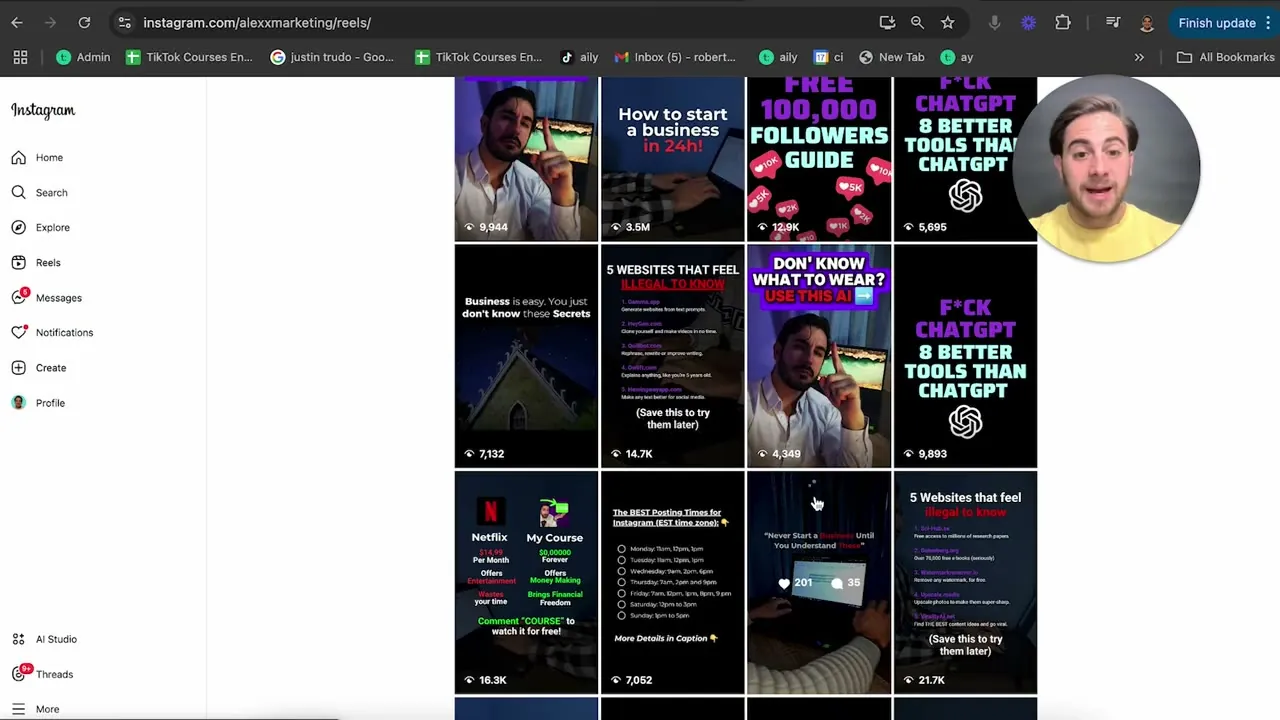
Use what you find as a starting point. Take the topic and the format, then make it your own way, with your own face, story and words.
How do you write a hook that stops the scroll?
Most Reels that flop have a weak hook. People scroll on autopilot. They keep swiping until something makes their brain stop and think, wait, what is this?
Layer three hooks in the first three seconds
- The text hook. The words on screen at the very start.
- The spoken hook. What people hear first.
- The visual hook. What they see in the first frame.
When all three work together, the Reel has its best chance.
Make the viewer ask a question
A good hook puts a question in the viewer's head that they need answered. The rest of the Reel answers it slowly. When you close one loop, open another.
- Give context first. Starting mid sentence with no context makes people swipe, because they do not know why they should care.
- Challenge a common belief. Something like lean at 45 and I eat carbs every day works because it goes against what people expect.
- Do not give the answer away on the first frame. If the viewer can guess the ending from the hook, they have no reason to stay.
- Clean up the first frame. One clear subject, good light, and text placed inside the safe zone so the buttons and caption do not cover it. A phone from the last four years and a window are enough.
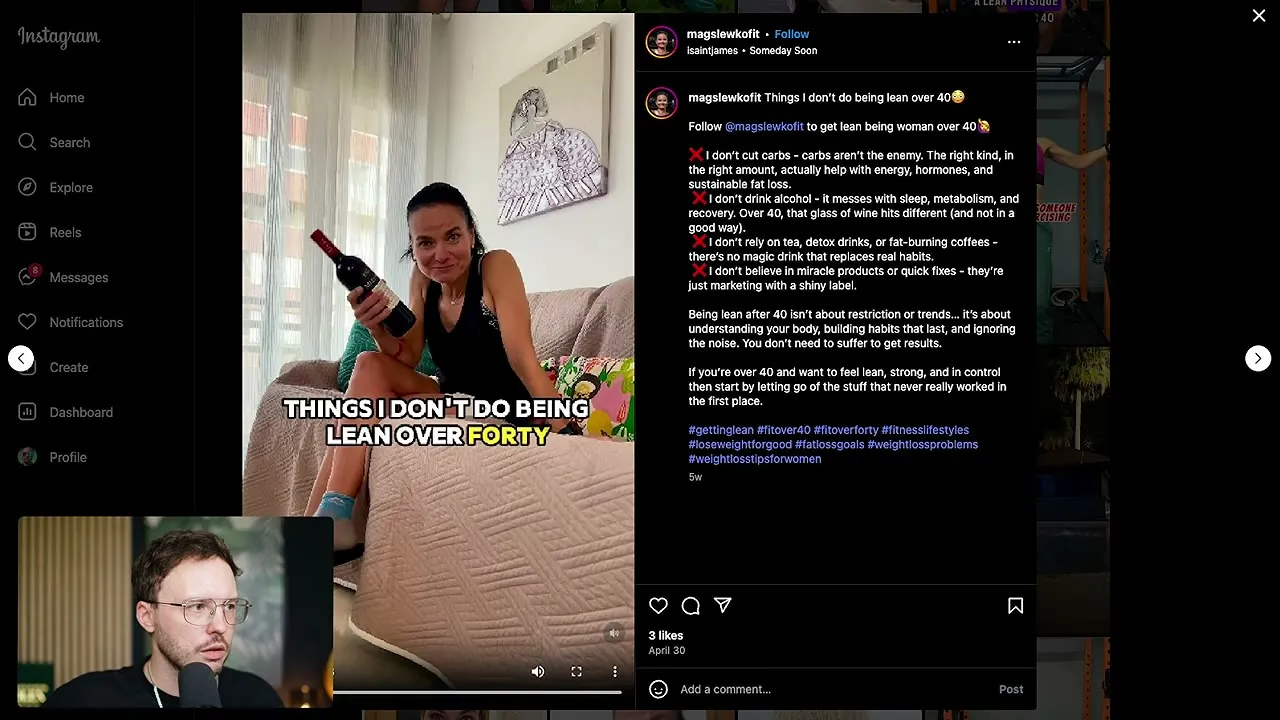
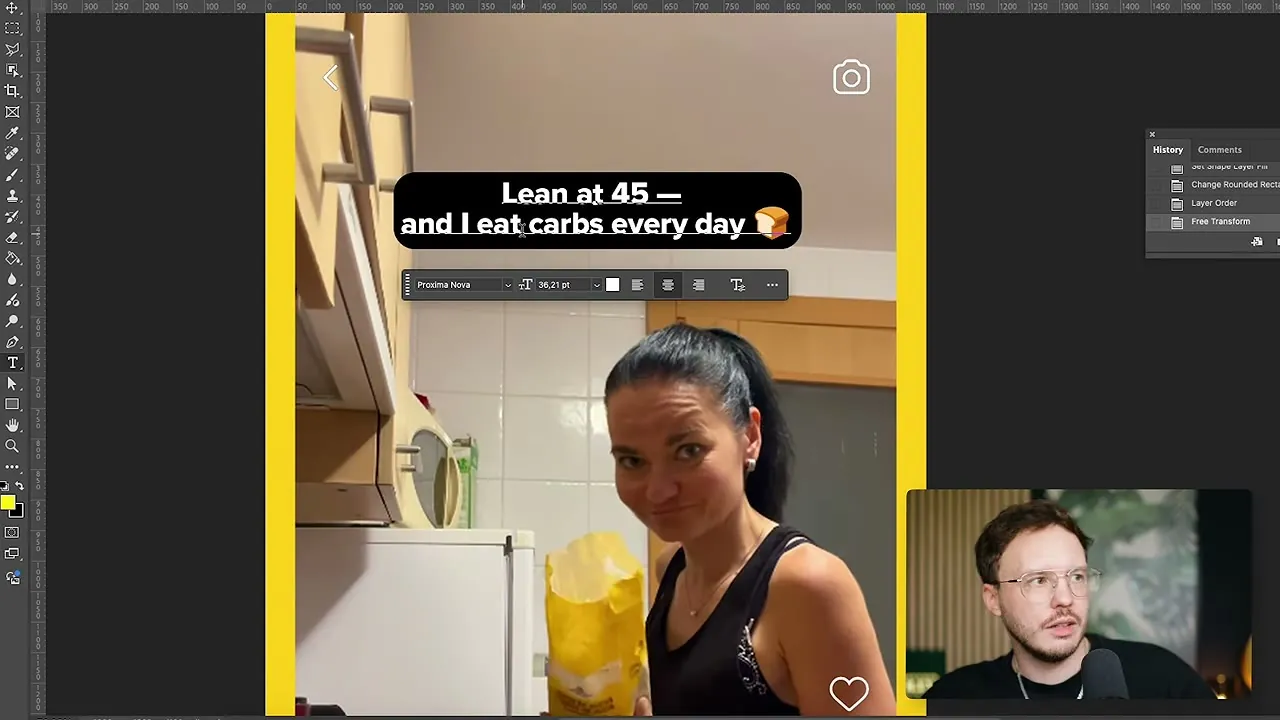
You can also use an AI chat tool to sharpen a hook. Screenshot a Reel in your niche, upload it, and ask for two or three stronger hooks for your own version. Pick one, never all of them.
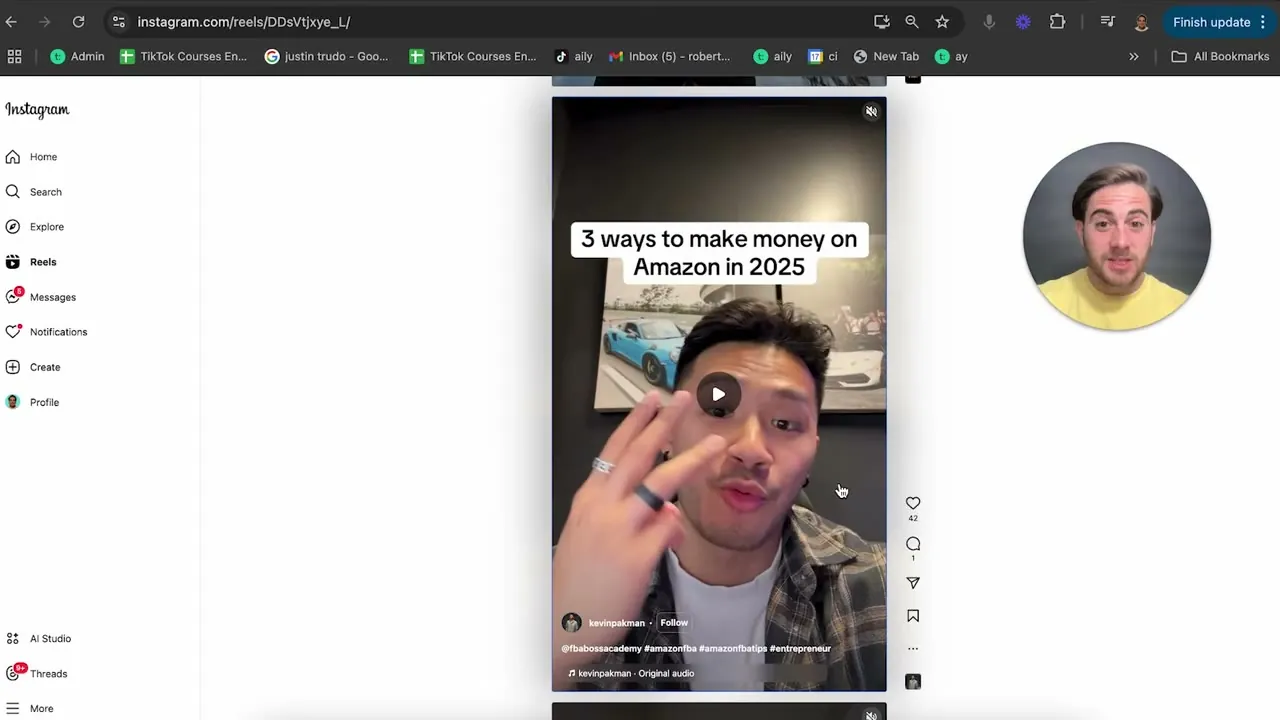
Where should your keywords go?
Instagram reads your words to learn what a Reel is about and who to show it to. Words also help your Reels show up in Instagram search. Put the main phrase in five places:
- The text on screen in your hook.
- The caption.
- The hashtags.
- The voice over.
- The comments, by replying with it or getting your viewers to use it.
Do not spend long on hashtags. Instagram has said they do not help you grow. A few that match your keyword, then move on.
How long should a Reel be?
Test two lengths:
| What to test | The numbers to start with |
|---|---|
| Short Reels with most of the message in the caption, like memes | 5 to 7 seconds |
| Most other Reels | 20 to 30 seconds |
| Hook | Text, sound and picture in the first 3 seconds |
| Proven ideas to save before you start | At least 20 Reels with over 1 million views |
| Accounts to watch | 5 to 15, checked every 24 to 48 hours |
| Your first test batch | 9 Reels: 3 formats, 3 times each |
| When to read a trial Reel | After 24 hours |
| How often to study your insights | At least once every 30 days |
Many creators post Reels that are too long. Instagram has not been pushing content over 90 seconds. Post a few of each length and see which works for your account.
The Influencer Program is a free creator community that teaches you and helps you grow, with free guides and content. We are not talent managers or an agency that signs you, and there is no contract.
Join the free creator program
Free training to grow, a community of creators, and weekly feedback on your videos. No contract.
(Put your real links. No follower minimum, but you need to be an active content creator, otherwise you get rejected)
How do you test ideas without hurting your page?
Post your first nine as a test
Pick three formats from your folder that you can film where you are. Make each one three times, for nine Reels. Mix them up: a talking head, a voice over, a trend with B roll, and different goals like teaching, inspiring and entertaining.
After all nine are up, find the three with the most views and ask what they have in common. It might be the audio, the hook, the on screen title, the format or the visuals. Then keep using that pattern.
Use trial Reels
Trial Reels show a new Reel only to people who do not follow you. After 24 hours you can see how it did. If it did well, you can let it publish to your page on its own.
Use them to test two versions of the same idea with a different hook, length or format, so weak tests never land on your profile.
How do you read the results?
Open your insights and look at each Reel:
- Watch time. Which Reel did people watch the longest? This is the strongest signal.
- Shares. Which one did people send to others?
- Follows. Which one brought you new followers? Make more like it.
- The ones that flopped. Was the hook lazy? Was the first frame cluttered?
Every account is different, so what works for you may not work for a friend. Study your numbers at least once every 30 days. If you post every weekday, look back at the week when it ends.
How do you turn views into followers?
A viral Reel sends people to your profile. Your profile decides if they follow.
- Name field. The bold name on your profile is searchable. Put words your viewers type, like running for beginners.
- Bio. Tell people what they get if they follow you, not where you live.
- Category. Pick the one that matches your niche. It helps Instagram understand your account.
- Cover images. Each Reel cover should say what the Reel is about in text people can read from the grid.
To keep growing after the first spike, see how to get followers on Instagram.
How often should you post?
As often as you can keep up without burning out. The head of Instagram, asked this directly, did not give a number. Lasting matters more than one viral week. Pick a pace you could keep for 2 years.
For example, three Reels a week, on Monday, Wednesday and Friday. If your first nine are done, you have 3 weeks ready. Batch film one day and batch edit another. Save a backup of each draft before you post, because drafts sometimes disappear.
What can you do this week?
- Write down your one topic and who it is for.
- Fix your name field, bio and category.
- Save 20 Reels in your niche with over 1 million views from the past three months.
- Pick three formats and plan nine Reels, three of each.
- Write each hook with text, sound and picture working together in the first three seconds.
- Post your first few as trial Reels and check them after 24 hours.
More guides
- Get your pins found by thousands of people searching for exactly what you offer
- Go viral on TikTok, then keep the people who found you
- Get your TikTok Shop videos pushed to buyers, whatever your follower count
- Write posts on X that people stop for, save and share
- Get YouTube to show your videos to more of the right people
- Give your song the best chance to go viral, and turn the views into real fans
- Make your YouTube channel today and set it up to grow
- Make money on TikTok Shop, starting with your first sale