The Influencer Program / Guides
Join the right affiliate networks and earn from the products you already talk about
How networks work, which ones fit your content, how to get approved, and how to tell a link that pays from one that does not. Shown on real screens.
- 8 min read
- Updated Nov 22, 2026
- 100% free community
(Put your real links. No follower minimum, but you need to be an active content creator, otherwise you get rejected)
An affiliate network is one website where thousands of brands run their affiliate programs. You make one free account, apply to the brands that fit your content, and get your links, your sales numbers and your payments in one place.
Impact.com is a big general network and a good first one to try. Amazon Associates covers almost any product, and PartnerStack is built for software brands that pay more per sale.
What is an affiliate network?
Affiliate marketing means you share a link to a product. When someone clicks it and buys, the company pays you a commission, a piece of the sale. The buyer pays nothing extra. The company gives you part of what it makes on that sale.
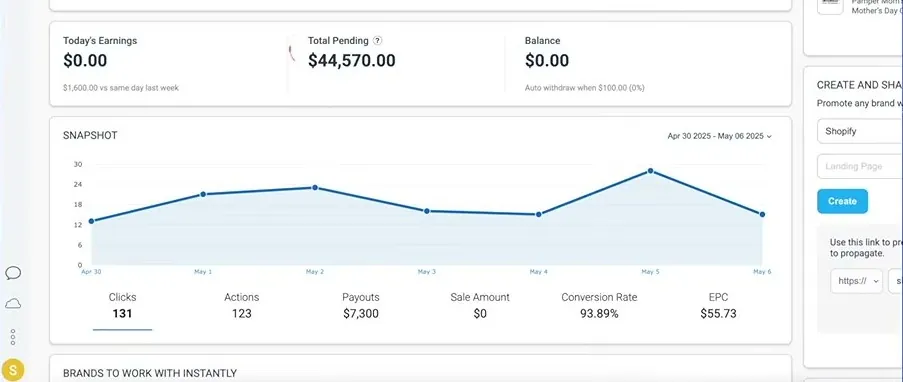
You can join a brand's own program, or you can join a network. A network is a platform thousands of companies use to track clicks and sales and to pay their affiliates. Instead of signing up on each brand's site, you browse brands in one dashboard, click join, and get your links there once you are approved.
Joining is free. There are no ongoing fees, and you do not have to make a set amount of content. Think of yourself as a freelance salesperson for the brands you pick. You post as much as you like, and you earn when people buy through your links.
Which affiliate networks do creators use?
- Impact.com. A large general network with thousands of companies. You will see names you know, like Target, New Balance and CVS, plus apps and online services. It is free to make an account.
- Amazon Associates. Amazon's own program. One account gets you a link to almost any product Amazon sells, so it is the easiest place to start. The catch is that Amazon pays less than most other programs, roughly 1% to 10% depending on the product.
- PartnerStack. Built for software, like email tools. Software brands pay much more per customer. Some pay a share of revenue, such as 10%, and some business software pays $1,500 for every new paying customer.
- ClickBank, ShareASale and CJ Affiliate. Other big general networks you will hear about, each with its own mix of brands.
- FlexOffers. Some brands, such as certain banks, run their program here.
You can join as many networks and programs as you want.
What about going straight to a brand?
Many brands run their own program outside any network. Search the brand's name plus the words affiliate program to find it. Stores like Sephora, Ulta and Best Buy have one. If your niche is fitness, you could go straight to a brand like Gymshark.
If a brand you love has no program at all, email or message them and ask them to make one. It is not hard for a company to set up, and a lot of them will do it.
How do you get approved?
On a network, each brand approves you on its own.
Getting approved
Sign up
make a free account and fill in your profile
Browse
read what each program pays and its window
Join
tell the brand about your channel and audience
Wait
follow up with a short email to the brand
Move on
if you are not eligible yet, try the next one
Amazon Associates works differently. You are accepted by default, then Amazon reviews your account after 180 days. If you do not have 3 sales by then, your account is closed. Join when you are ready to post content with your links, not months before.
How much do affiliate networks pay?
Every program sets its own pay, and it comes in two shapes:
- A percentage of the sale. Common for stores. Target pays 8% on products bought through your link, and Amazon pays between about 1% and 10%.
- A flat fee per customer. Common for banks, credit cards and software. One bank paid $100 for every new customer who opened an account, and a credit card signup can pay $100 or $200. Rates differ, and you can negotiate them.
The gap between programs is huge. A $10 book at 4% earns you 40 cents. A single mattress sale has paid around $500. A few thousand views on the right product can earn more than a big audience sent to cheap ones. Where your niche allows it, look for programs that pay at least $30 to $50 per referral.
| Example | What it paid |
|---|---|
| A $10 book on Amazon at 4% | 40 cents |
| One new bank customer | $100 |
| One mattress sale | Around $500 |
Rates are not always fixed. Once you send a brand steady sales, you can ask for a higher rate. A lot of creators never ask.
Watch your earnings per click
Networks often show EPC, which stands for earnings per click. It is the average a link earns each time someone clicks. A cheap product on Amazon may earn only a few cents per click, while a bank offer might earn $1 to $2 per click. Compare EPC before you pick a program, and check which of your posts turn clicks into sales and why.
Know the cookie window
When someone clicks your link, the brand gives you credit for a set time. This is called the cookie window or referral window.
- Amazon: 24 hours. Anything they buy in that time counts, even if it is not the product you showed. Items they add to their cart in those 24 hours still count if they buy within 90 days. These extra sales can be a big chunk of your Amazon money.
- Target: 7 days. If they buy 6 days later, you get paid. At 8 days, you probably do not.
- Many other programs: 30 days.
Where do you put your affiliate links?
A link nobody clicks earns nothing. Put yours where people already are. An email list is one place to own your audience, unlike social media.
- Video descriptions. On long YouTube videos, put a link to each product you review in the description. Good review videos can keep earning for years.
- A link in bio page. Short videos on TikTok, Reels and Shorts cannot hold a clickable link. Say out loud or with text on screen that the link is in your bio, and keep one simple page there with every product you talk about. You can build one for free.
- Comment to get the link. Ask viewers to comment a word, and a DM tool sends them a free guide with your links inside.
- Your own website and email list. These are yours, so no algorithm change can take them away. Put your links in reviews, guides and emails.
What about YouTube Shopping?
If you are in the YouTube Partner Program, YouTube runs its own affiliate program. You tag products in your videos, Shorts and lives, and earn on the whole basket the viewer buys in that order. You are paid through AdSense, usually 60 to 120 days after the purchase, and a return reverses that commission. See YouTube affiliate marketing for how it works.
Affiliate links pay you for sales. Brand deals are another way to earn from the audience you build. The Influencer Program is a free creator community that teaches you and helps you grow, with free guides and content. We are not talent managers or an agency that signs you, and there is no contract. Start with the affiliate programs that pay creators.
Join the free creator program
Free training to grow, a community of creators, and weekly feedback on your videos. No contract.
(Put your real links. No follower minimum, but you need to be an active content creator, otherwise you get rejected)
How do you stay in a program and get paid?
- Read the terms of every program. They differ. Some do not let you run ads for their product, and some limit what you can say about the company. Creators who push the limits get removed and lose that income.
- Only promote what you use and like. If you push a bad product for the money, people stop trusting you, and you will not last long.
- Add your tax info right away. Amazon will not pay you until you do. If you have both an Associates account and an Influencer account, you fill it in for each one.
- Set your payout threshold. On Amazon you can set it to $10, so you are paid as soon as you pass it. You can choose direct deposit to a personal bank account, a check, or an Amazon gift card.
Be patient. Affiliate income builds slowly. A whole first year of posting can bring in only a few thousand dollars, and a lot of people who try make very little. A realistic first goal is $1,000 a month by month six. Stick with it for at least six months and keep posting.
What can you do this week?
- Write down your niche and five products you already use and like.
- Make a free Impact.com account and apply to three brands that fit your content.
- Search each product's brand name plus affiliate program to find the ones outside any network.
- Compare what each program pays, its cookie window and its EPC.
- Make one review video with your link in the description or on your bio page.
- Read how affiliate links work before you post your first one.
More guides
- Get paid by the affiliate programs that fit what your followers already buy
- Apply for the Amazon affiliate program and get your first 3 sales counted
- Earn a bonus commission from brands through Amazon Creator Connections
- Get into the Amazon influencer program and earn from the products you already show
- Become a brand ambassador for a brand you already use
- Read your next influencer contract with a clear checklist
- Pick a campus ambassador program that pays you
- Plan your posts once, then keep posting without the weekly scramble